
Thermal Characterization
Across Industries
Laser Thermal works across five industries where conventional thermal characterization runs into the same five categories of thermal challenges. How each category shows up, and what’s actually at stake when it does, changes from industry to industry.
Conventional characterization methods were built for a simpler thermal picture: one material, one direction, one average value across the part. That picture is breaking down everywhere; it just breaks down differently depending on what you’re building.
Semiconductor Industry
Thermal management has become an architecture-level design constraint.
Interconnects have shrunk to dimensions where bulk material data no longer describes what’s actually happening. Stacked dies, hybrid bonding, and backside power delivery have turned thermal management from a downstream check into a constraint that shapes the architecture itself.
That picture breaks down at the scales and structures modern devices depend on. A thin film doesn’t behave like its bulk counterpart. An interface between two materials can matter more than either material alone. Heat doesn’t move the same way vertically through a stack as it does laterally across it. And a process change upstream can quietly shift thermal performance long before it shows up as a device failure downstream.
This is where the assumptions behind conventional thermal characterization begin to break down, and where Laser Thermal’s work begins.
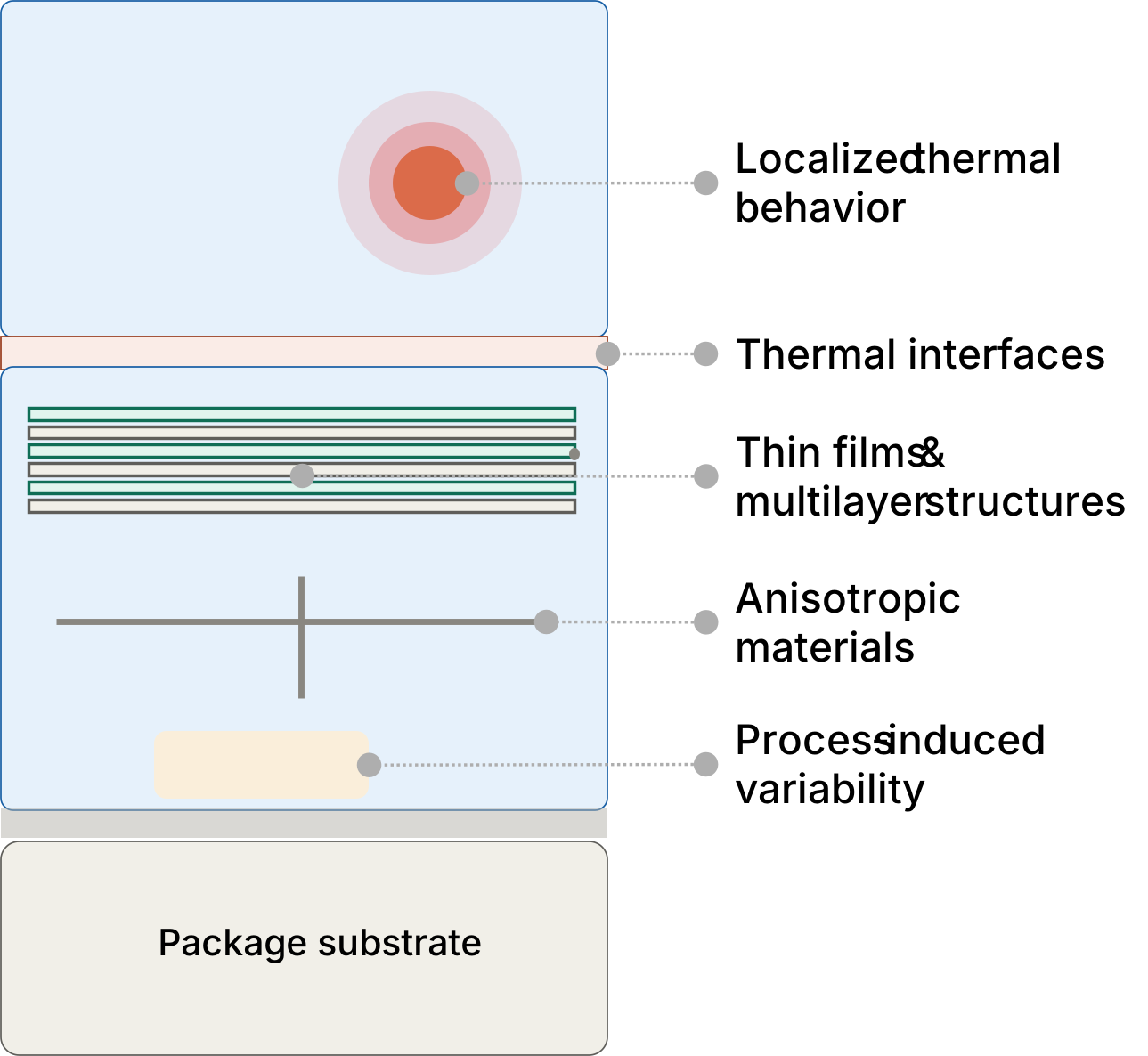
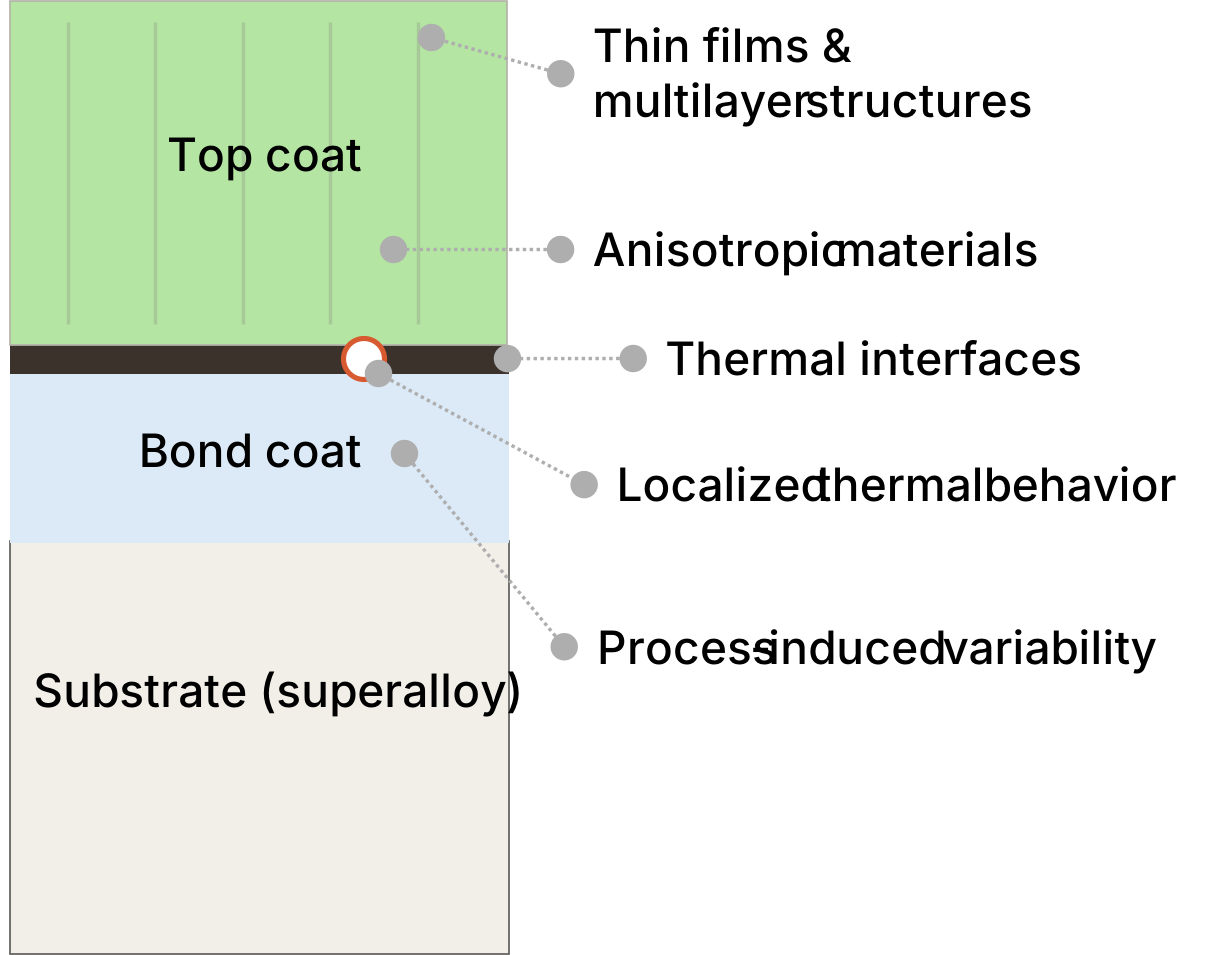
- Thin Films & Multilayer Structures: when film thickness and complex material stacks change heat transport in ways bulk properties no longer predict.
- Thermal Interfaces: when resistance at the boundary between two materials becomes as important as the materials themselves.
- Anisotropic Materials: when heat transport depends on direction, and a single conductivity value isn’t enough to describe it.
- Process-Induced Variability: when a deposition, formulation, or integration step changes thermal behavior in ways that need to be measured, not assumed.
- Localized Thermal Behavior: when the property that matters varies across the part, and an average obscures exactly what you need to see.
Electronics Packaging Industry
The thermal path extends far beyond the silicon.
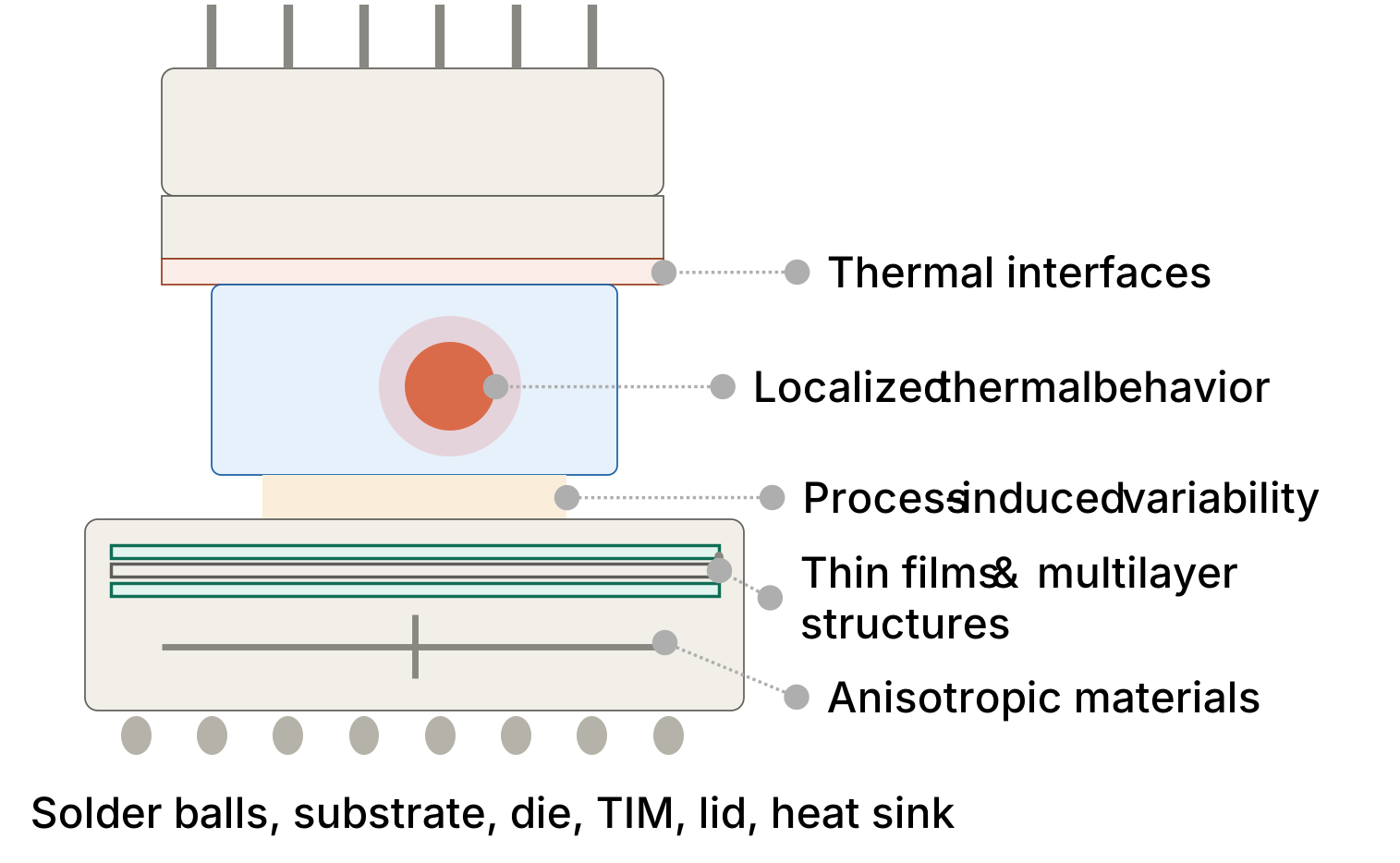
A chiplet-based module can perform exactly as simulated at the die level and still overheat in the field. Real thermal performance is decided by the path heat takes after it leaves the die: through the thermal interface material, the substrate, the lid, and into the board or heat sink. Fine-pitch flip-chip integration, 2.5D and 3D stacking, and increasingly thin bond lines have made the package itself, not just the silicon inside it, a primary thermal design constraint.
That picture breaks down at the scales and structures modern packages depend on. Bond-line testing tells you how a TIM performs in one stack. It can’t tell you whether the filler network or the interface is the problem. Bulk conductivity from TOPS separates the two.. The bond between a lid and a die, or between stacked dies, can dominate the overall thermal resistance more than either material alone. Heat spreads differently across a substrate than it does through it. A change in TIM formulation, cure process, or assembly step can shift package-level thermal resistance long before it shows up as a hot die in a customer’s system.
This is where single-material specifications stop telling the whole story, and where Laser Thermal’s work begins.
- Thin Films & Multilayer Structures: when TIM layers, underfills, and multilayer substrate stacks need to be characterized at their in-package thickness, alongside the bulk properties of the materials that form them.
- Thermal Interfaces: when the bond between die and lid, between stacked dies, or between package and board controls heat flow as much as the materials on either side of it.
- Anisotropic Materials: when substrates, heat spreaders, or engineered TIMs conduct heat differently in-plane than through-plane, and a single conductivity value isn’t enough to describe it.
- Process-Induced Variability: when TIM dispense, cure, bonding, or assembly steps change thermal performance in ways that need to be measured, not assumed.
- Localized Thermal Behavior: when thermal performance varies across a package because of uneven bond lines, void formation, or die-to-die coupling, and a package-average number hides exactly what you need to see.
Advanced Materials Industry
Material performance is increasingly determined by structure, processing, and interfaces.
Composite layups, filler-loaded polymers, and phase-change materials are now engineered at the microstructure level, where fiber orientation, particle loading, and layer architecture change thermal transport as much as chemistry does. Electric vehicle battery packs, additively manufactured heat exchangers, and next-generation energy storage materials have pushed material design past what handbook property tables were built to describe.
That picture breaks down at the scales and structures advanced materials depend on. A coating doesn’t conduct heat the way the same material does in bulk form. The bond between a coating and its substrate can matter more than either material alone. Filler loading and cure schedule change a composite’s effective conductivity in ways handbook data can’t predict. And a change in cure schedule or filler loading can shift thermal performance long before it shows up as a part failure in the field.
This is where handbook material data stops applying, and where Laser Thermal’s work begins.
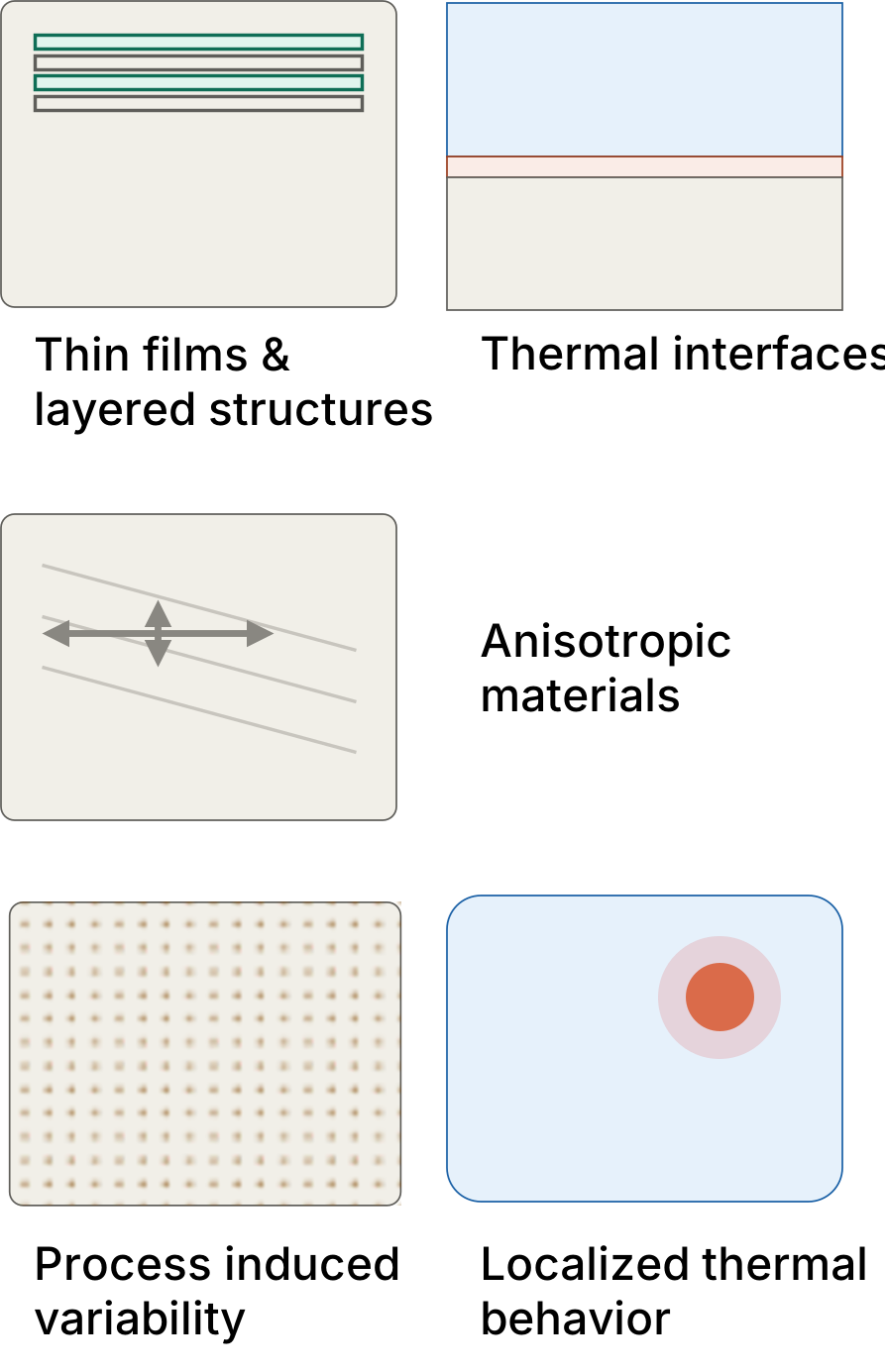
- Thin Films & Multilayer Structures: when coating thickness and layered material systems change heat transport in ways bulk properties no longer predict.
- Thermal Interfaces: when the bond between a coating and its substrate, or between two dissimilar materials, controls heat flow as much as either material alone.
- Anisotropic Materials: when fiber orientation, particle loading, or layup direction make heat transport depend on direction, and a single conductivity value isn’t enough to describe it.
- Process-Induced Variability: when a change in cure schedule, filler loading, or manufacturing process shifts thermal performance in ways that need to be measured, not assumed.
- Localized Thermal Behavior: when thermal performance varies across a part, and an average measurement conceals exactly what you need to see.
Aerospace & Defense Industry
Material performance now depends on more than the material itself.
Thermal performance is no longer determined solely by the material selected. It increasingly depends on how that material is processed, coated, bonded, and integrated into complex systems operating under some of the most demanding conditions engineers face. Advanced propulsion systems, hypersonic vehicles, thermal protection systems, and lightweight structural components are pushing materials beyond the assumptions traditional property data was built to describe.
That picture becomes increasingly difficult to apply to today’s aerospace materials and components. A thermal barrier coating behaves differently than the bulk alloy beneath it. The interface between bonded materials can influence heat flow as much as the materials themselves. Composite structures conduct heat differently depending on fiber orientation. A change in coating process, additive manufacturing parameters, or heat treatment can alter thermal performance long before it shows up as a spalled coating or a debonded joint during qualification testing or field operation.
High-power RF and directed-energy systems raise a different version of the same problem. Radar arrays, electronic warfare pods, and directed-energy systems concentrate enormous heat loads into components that can’t grow to dissipate them, because size and weight budgets are fixed by the platform, not the thermal load. Power electronics and avionics packed into increasingly dense bays face the same constraint from a different direction: more power density, less volume to move that heat through, and no tolerance for a thermal failure that takes a mission-critical system offline mid-operation.
Extreme operating environments raise a different constraint again. Thermal protection systems, hypersonic leading edges, and propulsion components don’t just need to survive high temperature; their thermal conductivity, emissivity, and phase-transition behavior have to be characterized at the temperatures they’ll actually see in service, not at room temperature and extrapolated upward. A material’s radiative behavior at 2,000°C often has little relationship to its behavior at 20°C, and an assumption that doesn’t hold at the temperatures that matter is the same failure mode this entire page has been describing, just triggered by heat instead of scale.
This is where standard qualification data reaches its limits, and where Laser Thermal’s work begins.
- Thin Films & Multilayer Structures: when coatings, thermal barrier systems, and layered material architectures exhibit thermal behavior that differs from bulk material properties.
- Thermal Interfaces: when bonded joints, coating interfaces, or dissimilar materials become critical to heat transfer and long-term reliability.
- Anisotropic Materials: when composites, additively manufactured structures, or engineered materials conduct heat differently depending on direction.
- Process-Induced Variability: when coating deposition, additive manufacturing, heat treatment, or joining processes change thermal behavior in ways that must be measured rather than assumed.
- Localized Thermal Behavior: when thermal properties vary across a component because of manufacturing variation, defects, or localized damage, or when substrate or die-attach conductivity varies across a part and drives a local hotspot that escapes an average measurement, and the region that matters most goes unseen.
Research & Academia
When the question is new, the measurement becomes part of the discovery.
In most industries, the problem is that conventional thermal data no longer describes a familiar material. In research, the more common problem is that no thermal data exists at all. Novel semiconductors, quantum materials, 2D materials, and engineered metamaterials are often synthesized before anyone has measured their thermal conductivity. The measurement isn’t confirming a design assumption; it is often the first data point for that material.
That makes the measurement the result: the number that becomes the finding, the figure that goes in the paper, the data another lab will try to reproduce. It has to hold up to peer review, replication, and a funding body that will ask how the number was obtained, including which properties were measured and which were assumed.
This is where Laser Thermal’s work begins.
- Thin Films & Multilayer Structures: when a newly synthesized film or heterostructure has no bulk reference value, and its thermal conductivity and volumetric heat capacity are themselves the unknowns.
- Thermal Interfaces: when a newly fabricated interface has no prior literature, and its thermal boundary conductance, the inverse of thermal boundary resistance, is the subject of the investigation.
- Anisotropic Materials: when a material is engineered for directional transport, and its in-plane and cross-plane thermal conductivity must be resolved separately to describe the property being studied.
- Process-Induced Variability: when a change in growth, deposition, or synthesis conditions shifts thermal conductivity or interface conductance from one batch to the next, with no process history to explain why.
- Localized Thermal Behavior: when a small or non-uniform sample varies across its own surface, and an average value would hide the spatial variation the research is trying to characterize.
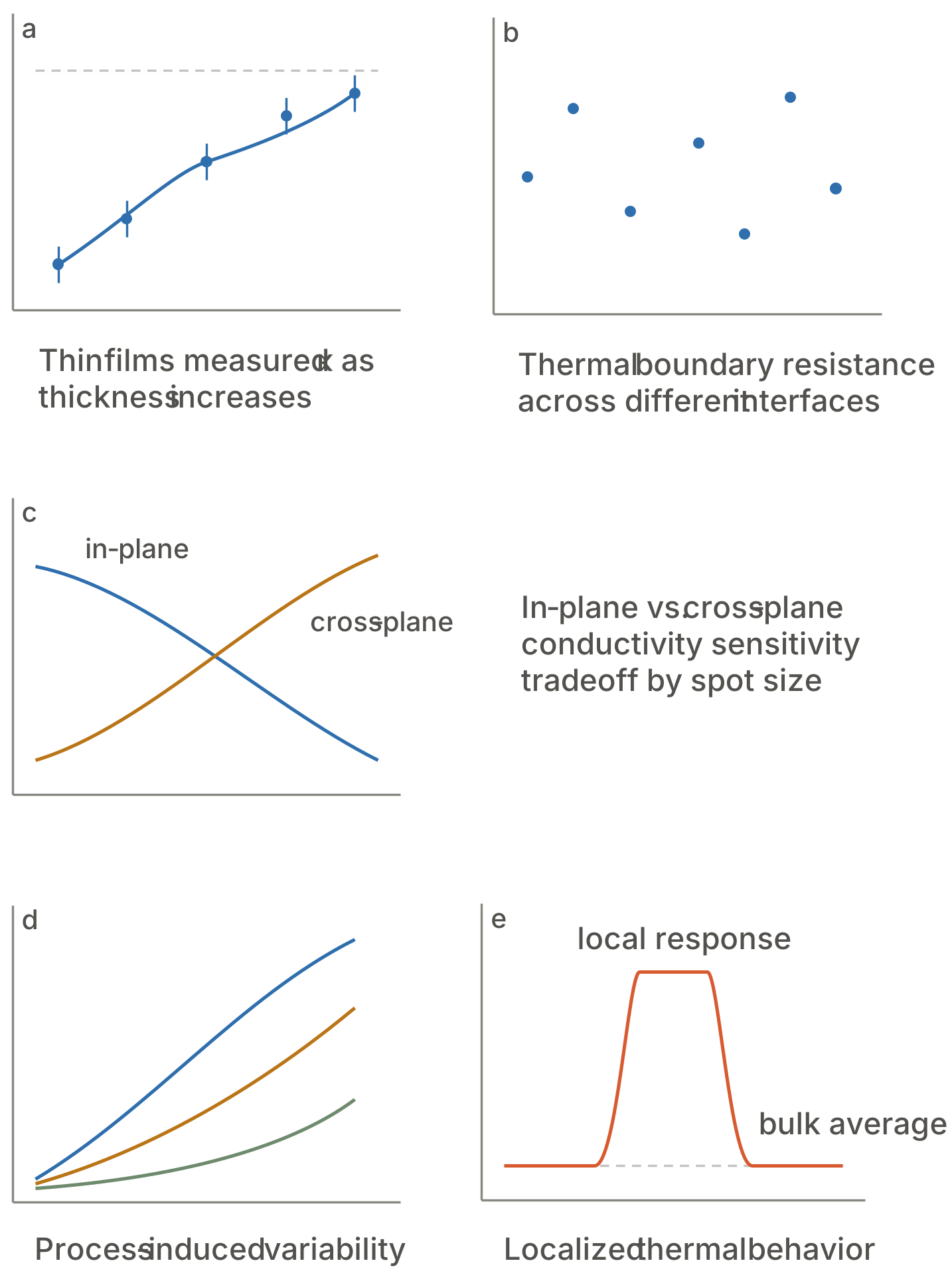
Every industry above runs into the same five thermal challenges from a different angle. Explore the challenge that matches the problem you’re trying to solve, wherever it shows up.
Heat Beneath The Surface
Thermal Metrology for Advanced Semiconductor Materials and Architectures
New from Our Learning Center

Overcoming Challenges in Thermal Conductivity Measurement, from Soft TIMs to CVD Diamond

Thermal characterization matters more as AI accelerators intensify an existing package-level bottleneck

Five Key Challenges for Increasing U.S. Domestic Semiconductor Manufacturing Capacity
What is Thermoreflectance?

Unlocking Thermal Measurements in Thin Films

Overcoming Challenges in Thermal Property Measurement and Imaging of TIMs

Thermal Measurements for Emerging Materials – State-of-the-art measurements for thin films, TIMs, and high-temperature materials
Heat Beneath the Surface: Thermal Metrology for Advanced Semiconductor Materials and Architectures
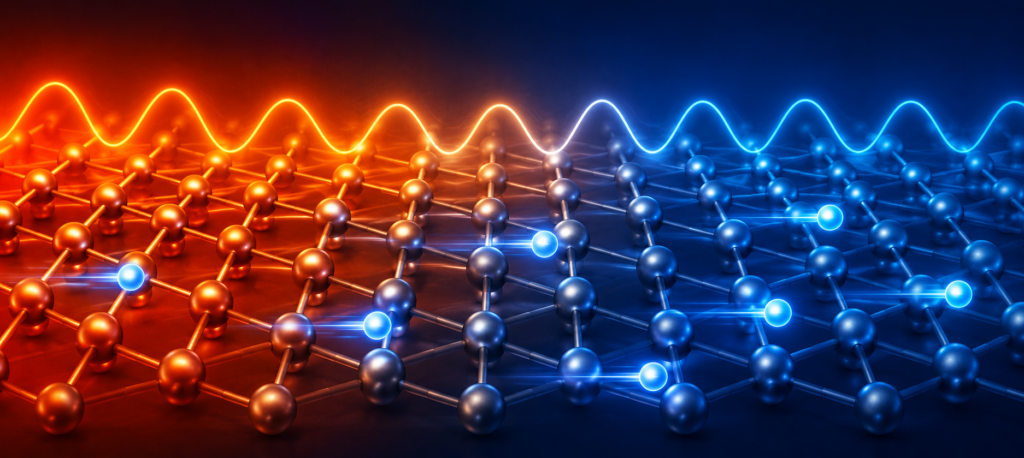
Unveiling Phonon Contributions to Thermal Conductivity and the Applicability of the Wiedemann–Franz Law in Ruthenium and Tungsten Thin Films.
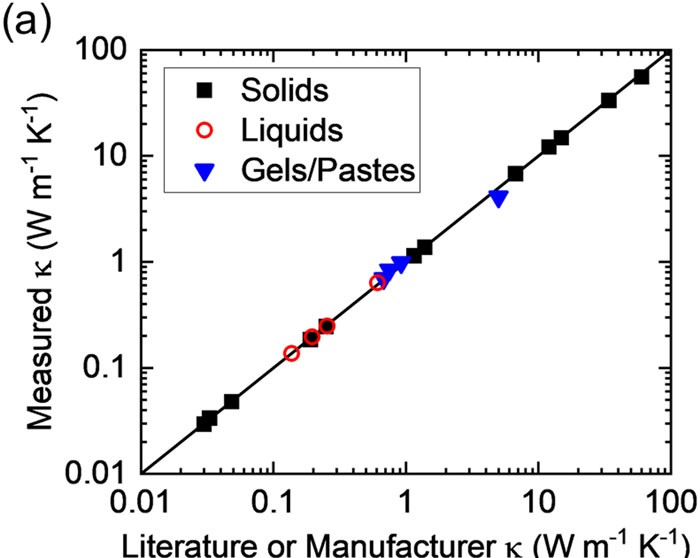
A thermo-optical plane source method to measure thermal conductivity
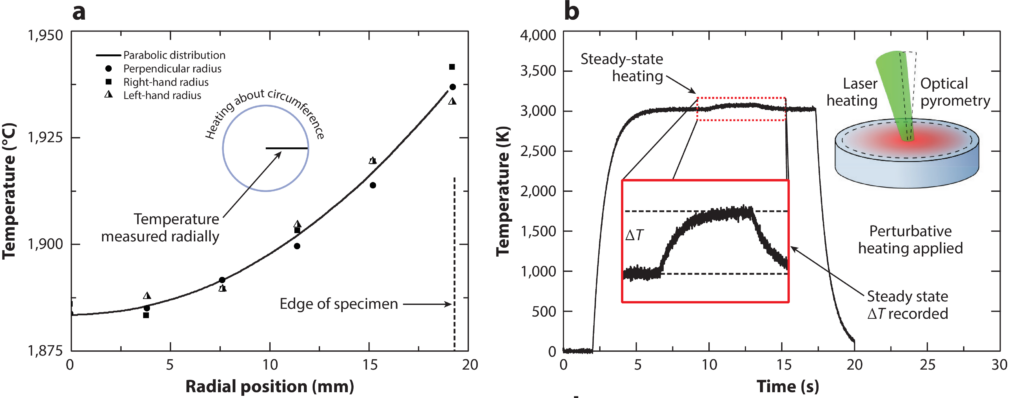
Limitations and Advances in Optical Thermal Transport Measurements: Extremes in Properties, Length Scales, and Temperature
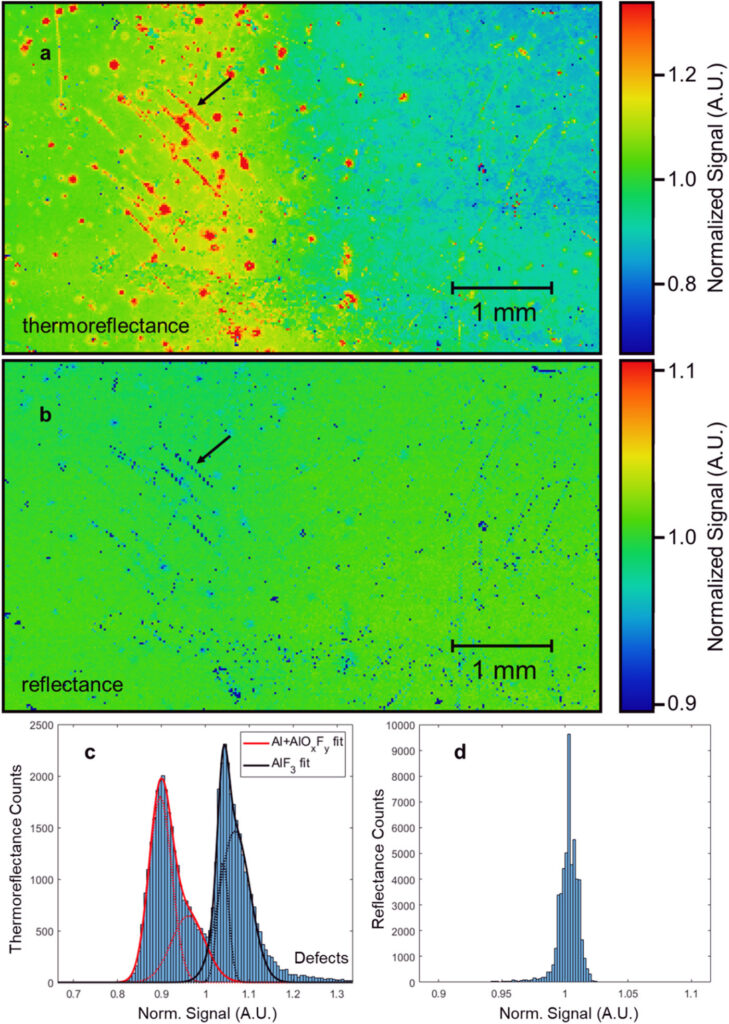
Characterization of AlF3-Passivated Aluminum Mirrors using non-contact thermal metrology
Thermal Conductivity
Thermal Resistance
Specific Heat, Volumetric Heat Capacity, and Thermal Diffusivity
Introduction to Thermal Metrology
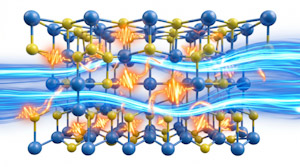
High Thermal Conductivity and Thermal Boundary Conductance of Homoepitaxially Grown Gallium Nitride (GaN) Thin Films
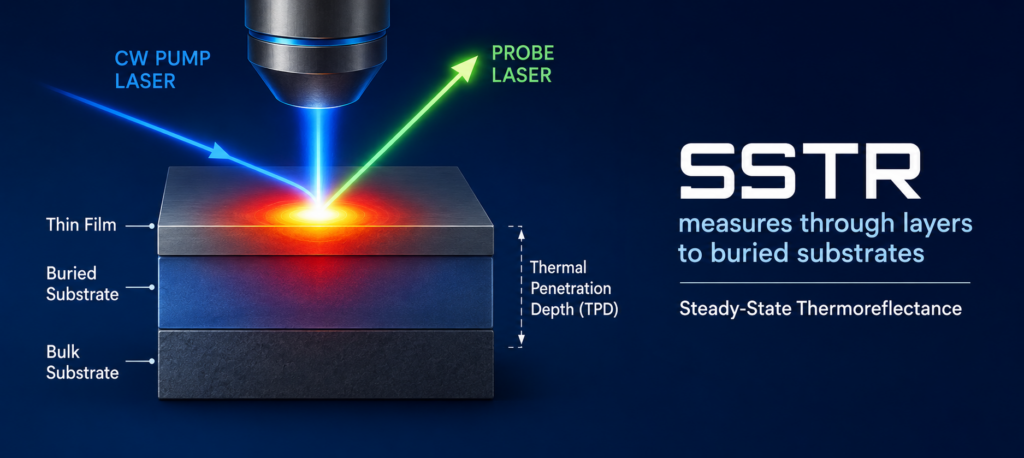
Thermal Conductivity Measurements of Sub-Surface Buried Substrates by Steady-State Thermoreflectance
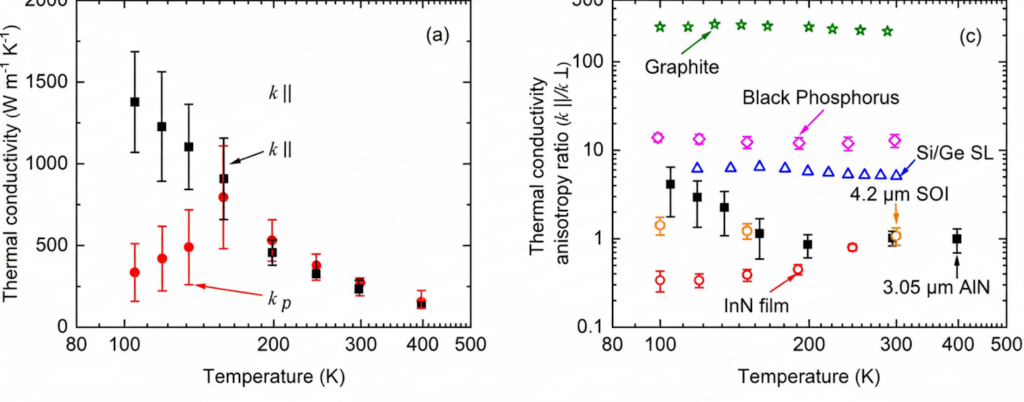
High In-Plane Thermal Conductivity of Aluminum Nitride Thin Films
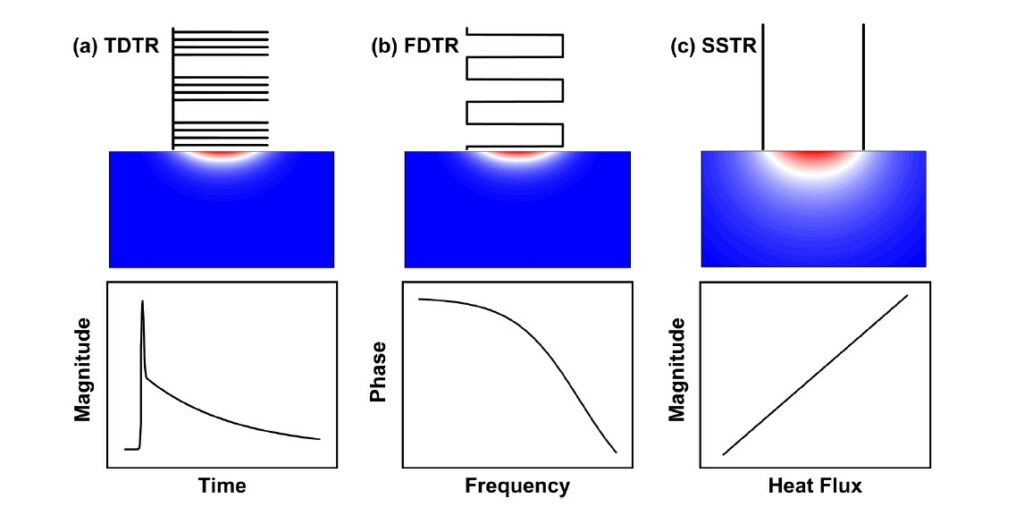
Spatially Resolved Thermoreflectance Techniques for Thermal Conductivity Measurements from the Nanoscale to the Mesoscale
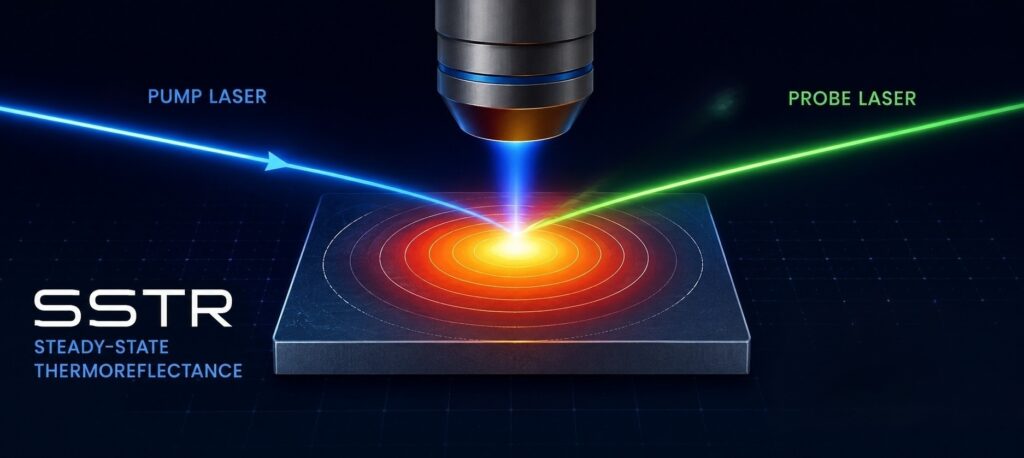
A Steady-State Thermoreflectance Method to Measure Thermal Conductivity
Volumetric Heat Capacity Unit Conversion Calculator
Thermal Conductivity Unit Converter
Temperature Rise Calculators
Thermal Energy Unit Conversion Calculator